How to Soften Dog Tartar
In this article:
Tartar on your dog’s teeth is more than a cosmetic issue, it’s one of the most common causes of gum disease, bad breath and oral discomfort in dogs. The good news is that mild to moderate tartar can often be softened and managed at home, especially when caught early. In this guide, we explain how tartar forms, how to spot it, and what you can realistically do at home – before a vet visit becomes unavoidable.
Key Takeaways
- Plaque forms daily and can harden into tartar within days.
- Early tartar can often be softened with consistent home care.
- Daily routines are more effective than occasional “deep cleans”.
- Severe tartar and gum disease still require veterinary treatment.
Plaque vs Tartar – What’s the Difference?
Plaque
Plaque is a soft, sticky film of bacteria that forms on your dog’s teeth every day, especially after meals. It’s invisible at first and easy to remove with brushing or other daily dental care.
Tartar
If plaque isn’t removed, it hardens through contact with minerals in saliva and becomes tartar. Tartar is rough, visible, and firmly attached to the teeth. Once formed, it’s much harder to remove and can irritate the gums.
How Do I Know If My Dog Has Tartar?
Dog tartar typically appears as a yellow, brown or grey deposit on the teeth, often starting near the gumline and spreading across the tooth surface. It’s most commonly seen on the back teeth.
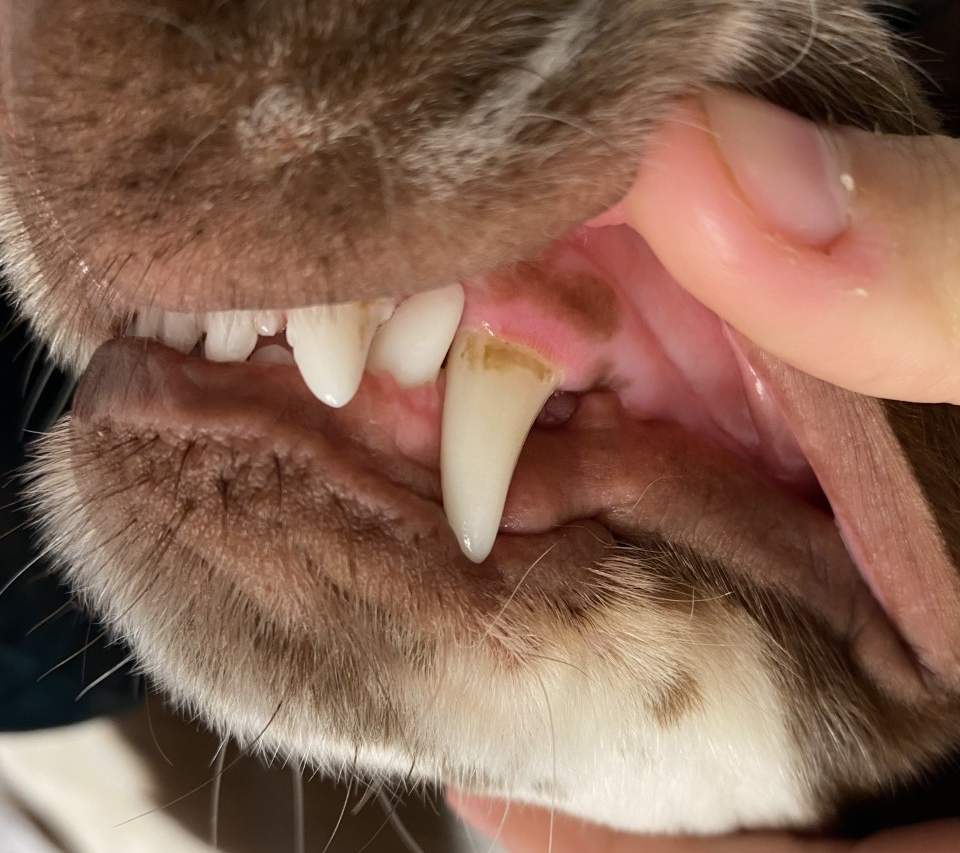
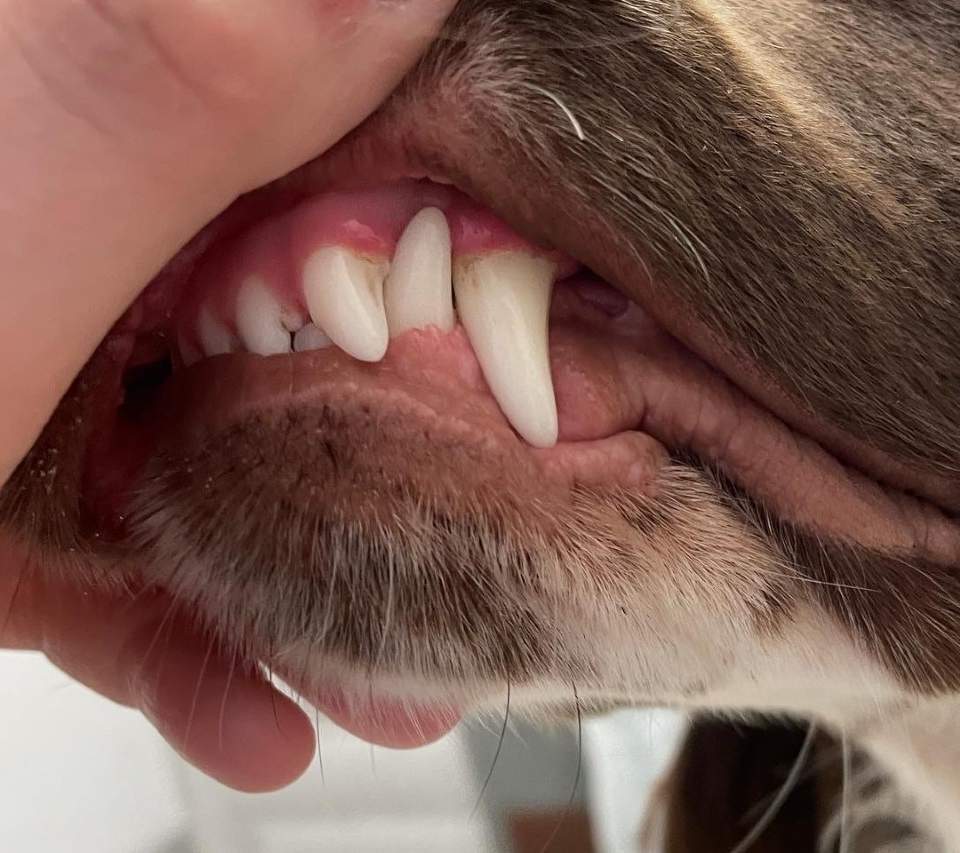
The images below show an example of a dog’s teeth before and after consistent daily dental care with ProDen PlaqueOff®. In the first image, tartar is visible along the gumline. In the second image, taken after regular use, the teeth appear cleaner with reduced visible build-up, illustrating how ongoing oral care can support improved dental hygiene over time.
How to Soften or Remove Dog Tartar Without a Vet
If tartar is still relatively light, a consistent home routine can help soften deposits over time and prevent further build-up.
Toothpaste and Toothbrushing
Veterinarians agree that toothbrushing is the most effective way to prevent plaque from turning into tartar. Use a dog-specific enzymatic toothpaste – never human toothpaste – and brush gently along the gumline.
Dental Chews, Powders and Bones
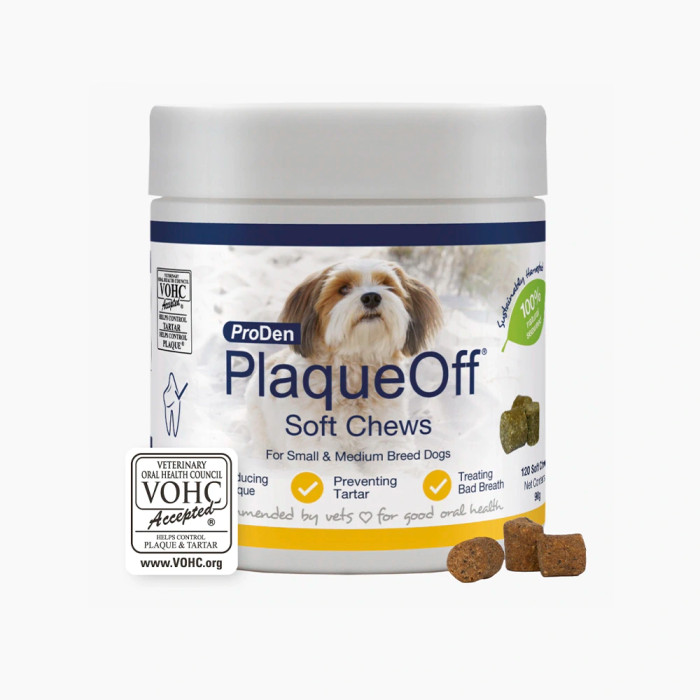
Systemic dental supplements work from the inside out, via your dog’s saliva. Products containing the unique seaweed ingredient A.N. ProDen® have been evaluated in clinical studies and are recognised by the Veterinary Oral Health Council (VOHC) for their ability to help soften existing tartar and reduce new plaque formation when used daily.
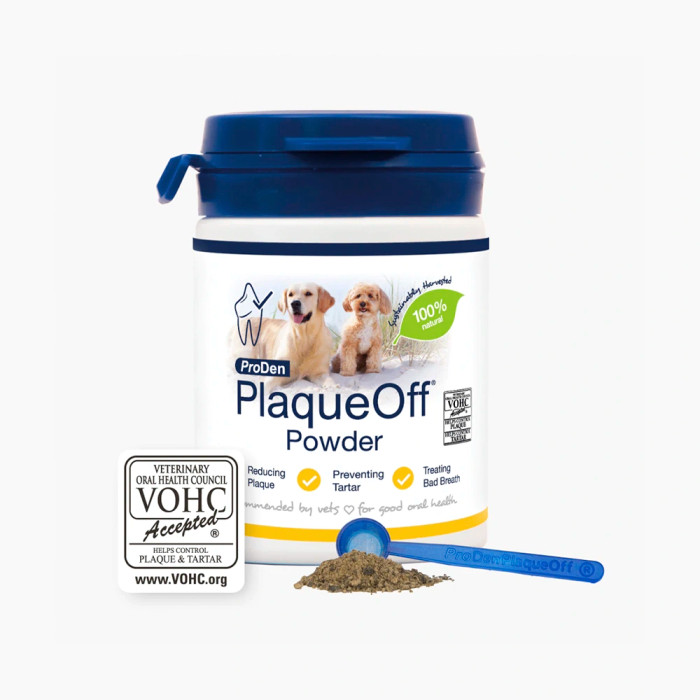
The ProDen PlaqueOff® range is available as:
• Powder sprinkled over food
• Soft chews and dental bites
• Dental care bones for added chewing action
These options are particularly useful for dogs that won’t tolerate toothbrushing.


Chewing Aids and Toys
Chewing can help mechanically scrape plaque from the tooth surface. Choose vet-approved dental chews or safe chewing toys designed for oral health.
ProDen PlaqueOff® Dental Care Bones, for example, offer a dual approach: the chewing action helps mechanically clean the teeth, while the unique A.N. ProDen® seaweed works systemically via saliva to help soften existing tartar and reduce new plaque build-up over time.
Dental Wipes and Sprays
Dental wipes allow you to manually remove plaque from the tooth surface, especially in dogs that resist brushing. Sprays can help reduce oral bacteria and freshen breath, but work best as part of a broader routine.
Water Additives
Water additives are mixed into your dog’s drinking water to help reduce bacteria and slow plaque formation. Add the recommended amount to your dog’s water bowl daily and select a palatable formula to ensure they keep drinking as usual.
When a Vet Visit Is Necessary
Home care has its limits. A professional dental cleaning under veterinary supervision is usually required if:
• Tartar is thick and hard
• Gums are inflamed or bleeding
• Teeth are loose or painful
• Your dog shows signs of discomfort
Once the teeth are professionally cleaned, daily home care becomes far more effective at maintaining results.
Related articles:
How Much Does Dog Teeth Cleaning Cost in the UK?
Choosing the Right ProDen PlaqueOff® Product for Your Dog
FAQ: How to Soften Dog Tartar
Light tartar can be softened and reduced, but heavy tartar usually requires professional cleaning.
With consistent daily dental care, many dog owners notice fresher breath and visible improvements in plaque and tartar within 3–8 weeks. This is also typically the timeframe in which results are seen when using systemic dental supplements such as ProDen PlaqueOff®.
Brushing is ideal, but many dogs benefit significantly from systemic dental supplements if brushing isn’t possible.
No, even dogs on dry food develop plaque. Dental care routines are still essential.
Tartar on your dog’s teeth is more than a cosmetic issue, it’s one of the most common causes of gum disease, bad breath and oral discomfort in dogs. The good news is that mild to moderate tartar can often be softened and managed at home, especially when caught early. In this guide, we explain how tartar forms, how to spot it, and what you can realistically do at home – before a vet visit becomes unavoidable.
Key Takeaways
- Plaque forms daily and can harden into tartar within days.
- Early tartar can often be softened with consistent home care.
- Daily routines are more effective than occasional “deep cleans”.
- Severe tartar and gum disease still require veterinary treatment.
Plaque vs Tartar – What’s the Difference?
Plaque
Plaque is a soft, sticky film of bacteria that forms on your dog’s teeth every day, especially after meals. It’s invisible at first and easy to remove with brushing or other daily dental care.
Tartar
If plaque isn’t removed, it hardens through contact with minerals in saliva and becomes tartar. Tartar is rough, visible, and firmly attached to the teeth. Once formed, it’s much harder to remove and can irritate the gums.
How Do I Know If My Dog Has Tartar?
Dog tartar typically appears as a yellow, brown or grey deposit on the teeth, often starting near the gumline and spreading across the tooth surface. It’s most commonly seen on the back teeth.
The images below show an example of a dog’s teeth before and after consistent daily dental care with ProDen PlaqueOff®. In the first image, tartar is visible along the gumline. In the second image, taken after regular use, the teeth appear cleaner with reduced visible build-up, illustrating how ongoing oral care can support improved dental hygiene over time.
How to Soften or Remove Dog Tartar Without a Vet
If tartar is still relatively light, a consistent home routine can help soften deposits over time and prevent further build-up.
Toothpaste and Toothbrushing
Veterinarians agree that toothbrushing is the most effective way to prevent plaque from turning into tartar. Use a dog-specific enzymatic toothpaste – never human toothpaste – and brush gently along the gumline.
Dental Chews, Powders and Bones
Systemic dental supplements work from the inside out, via your dog’s saliva. Products containing the unique seaweed ingredient A.N. ProDen® have been evaluated in clinical studies and are recognised by the Veterinary Oral Health Council (VOHC) for their ability to help soften existing tartar and reduce new plaque formation when used daily.
The ProDen PlaqueOff® range is available as:
• Powder sprinkled over food
• Soft chews and dental bites
• Dental care bones for added chewing action
These options are particularly useful for dogs that won’t tolerate toothbrushing.
Chewing Aids and Toys
Chewing can help mechanically scrape plaque from the tooth surface. Choose vet-approved dental chews or safe chewing toys designed for oral health.
ProDen PlaqueOff® Dental Care Bones, for example, offer a dual approach: the chewing action helps mechanically clean the teeth, while the unique A.N. ProDen® seaweed works systemically via saliva to help soften existing tartar and reduce new plaque build-up over time.
Dental Wipes and Sprays
Dental wipes allow you to manually remove plaque from the tooth surface, especially in dogs that resist brushing. Sprays can help reduce oral bacteria and freshen breath, but work best as part of a broader routine.
Water Additives
Water additives are mixed into your dog’s drinking water to help reduce bacteria and slow plaque formation. Add the recommended amount to your dog’s water bowl daily and select a palatable formula to ensure they keep drinking as usual.
When a Vet Visit Is Necessary
Home care has its limits. A professional dental cleaning under veterinary supervision is usually required if:
• Tartar is thick and hard
• Gums are inflamed or bleeding
• Teeth are loose or painful
• Your dog shows signs of discomfort
Once the teeth are professionally cleaned, daily home care becomes far more effective at maintaining results.
Related articles:
How Much Does Dog Teeth Cleaning Cost in the UK?
Choosing the Right ProDen PlaqueOff® Product for Your Dog